On Being
and Building:
An Interview
with Tiger Dingsun
Tiger Dingsun is a web developer and graphic designer based in NYC. He is currently the web producer at Triple Canopy, an experimental magazine and arts non-profit. Other interests include fandom studies, paleo-archaeology, psychoanalysis, and the poetics of the digital quotidian.
LS
How would you describe your design practice to someone who's never seen your work before?
TD
That's a big question. I guess the way that I've described it in the past is that I'm interested in text and the materiality of text in a lot of different ways. I feel like I approach it in a very multidisciplinary way, so through writing, but also web design, web development, and more traditional print graphic design.
More salient to my practice is not so much the design or the output, but the research that I'm interested in. I would say my main research interests are around internet sub-communities and fandom and the way that institutional memory is created on the internet, essentially — as well as a bunch of other things. Post graduating from RISD, I've come to develop my practice more around these research questions that have coalesced for me, rather than anything that I'm making in particular.
MX
Since your practice is so research driven, how do you gather, collect, and sort your ideas?
TD
I do use Are.na a lot. I have a lot of private channels where I’m dropping things in. I use it less so for visual research and more so for just collecting random ideas and snippets of text and sources. I find that really helpful. Also, just literally my Notes app to be honest.
MX
Do you have a biggest source of inspiration, like a favorite designer or artist?
TD
One person that comes to mind is Eric Timothy Carlson, who's a designer and artist. He's most famous for doing the Bon Iver album covers, which I remember seeing when I was at RISD and being really inspired by it. He works with collage and a large image repository in a way that I've also tried to cultivate. I think he is really good at pulling together different images and symbols that don't necessarily seem to work together at first glance, but then they produce some sort of frisson or effect when they're next to each other. I also think he works in a very intuitive way, which is something that I've been trying to cultivate more recently with my visual graphic work.
LS
Do you think there's a big difference between designing something that's still versus interactive?
TD
It's exactly the same. I think whenever I'm doing anything interactive — primarily, that would be web design and development — the aesthetic and the visual design of the website always follows after and is determined by the functionality and the experience. When I'm designing a poster, I think about it first very infrastructurally — in terms of type hierarchy, what elements should be the biggest, what should be the smallest, and how the eye is traveling across the page. That has less to do with the surface level texture or aesthetic, which usually comes a little later for me. I try to apply some sort of surface level design to support the infrastructure that I'm setting up.
MX
So, very much like form follows function?
TD
A little bit, yeah. Especially with client work, that’s typically the route I take. With my personal visual exploration, I try to do things more intuitively. I think I’m working from a more internal place. Recently, I've been wanting to create more intuitive visual work that can serve as a repository, reference, or back catalog for myself. So, when I’m creating a poster for a client, I can refer to all this other stuff that I've made — just for myself essentially — and see what moves I’ve done and what I could try applying to this new poster.
MX
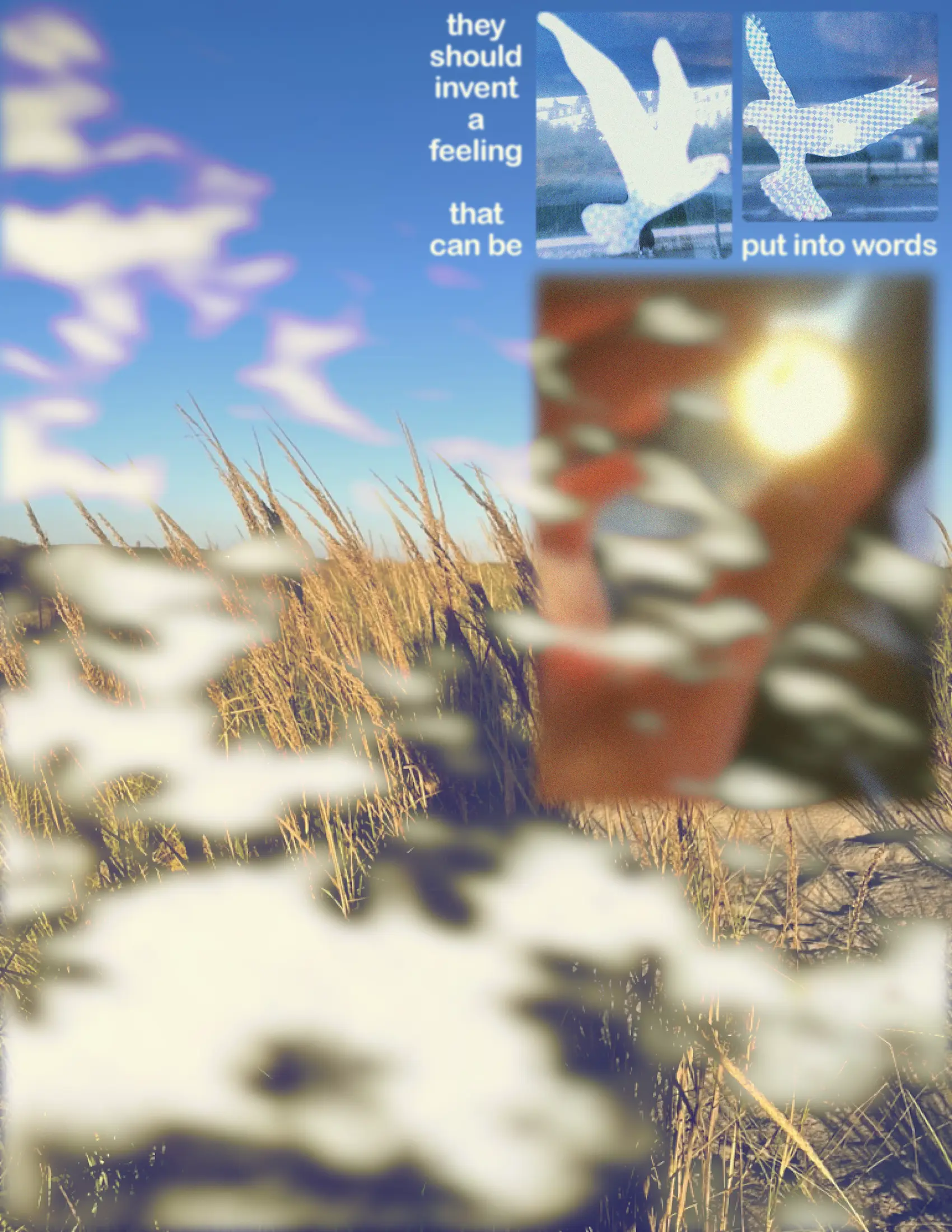
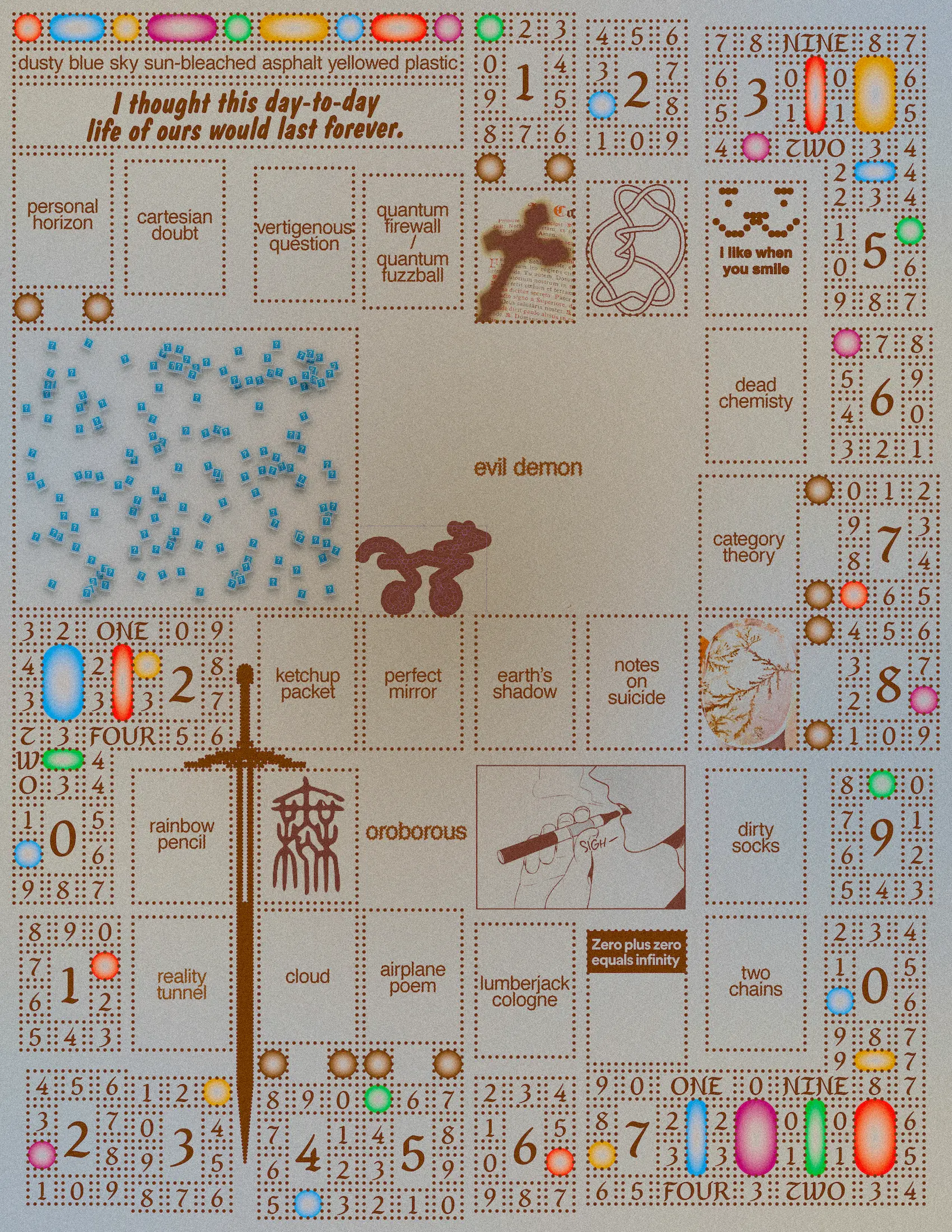
I've been looking at your poster series, and they’re so awesome.
TD
Thank you so much. Yeah, that's been a recent exploration for sure.

MX
How would you describe the relationship between your design practice and interests outside of design, such as writing or coding?
TD
Everything has a central route in an interest in media theory, and the cultures that develop around media artifacts. I’m interested in the way these things both function today and have evolved culturally, in the recent past as well as on a longer timeline of human history. Before, I used to be really interested in the various ways text and image functions on the internet. I feel like I've since expanded my interest into the way human culture evolves alongside media.
LS
What has been the most memorable project you've worked on so far, in any medium?
TD
Definitely the essay that I just published on Are.na about Minecraft. [laughs] It's a psychoanalytic analysis of Minecraft, essentially. That's definitely the essay I'm the most proud of, and have put the most effort into. It came from a culmination of this talk I gave as part of Naive Yearly in Slovenia last September, so it's just been a long timeline.
MX
Yeah, I remember reading that essay and just being in awe of how many different things you were able to pull together.
TD
Yeah, there were definitely a lot of references.


MX
In a similar vein, has there been a particularly challenging project that you've worked on, either in process or execution?
TD
Recently, what's been most challenging for me is just managing short deadlines and quick turnarounds, and prioritizing the different projects that I have going on. It’s made me realize the importance of budgeting enough time in the initial ideation process, and allowing yourself the time to go down different options and paths before settling on one thing. The flip side of that, of course, is not getting too lost in the ideation process, and being willing to make a decision at some point.
MX
How do you balance these very personal projects versus client work?
TD
Client work kind of comes in waves. There will be some months where it's a little lighter for me, and then some months where deadlines somehow line up with each other all at once. I would love to cultivate more time in my life to work on my personal practice a little bit more, but I've just been trying to find time in between client projects, to be honest. I don't know if I have a good answer to that necessarily, because I'm not that good at it. [laughs]
One thing that I like to do definitely — even if I'm not making anything — is to continue collecting and cataloging references, sources, and images, and to have that be a constant practice. I feel like I have this body of sources and references that I can explore more deeply when I do have free time.
LS
Going back to your RISD life and the degree project, I'm curious about your process for creating I Never Want to See the Same Image Twice. Did you plan to create all those different sites from the start, or was it more spontaneous?
TD
I remember taking quite a while to even settle on the idea of creating a series of websites. At the beginning I was thinking more broadly, and had wanted to do something more semiotic, that had more to do with cataloging the signifiers of various genres. But I think I eventually settled on this idea of trying to explore as many different ways to utilize the affordances of the web to present text or content.
It was an iterative process where I would try to generate as many ideas of how a website could operate as possible, and then just go down that list and create something. I gave myself a list of probably 10 to 20 prompts and tried to work through that. After that, I spent some time looking back at the websites that I'd made and tried to draw comparisons, categorized them a little bit, and noticed the different threads or trends that were emerging in what I was making.
But it definitely took me a while. I remember my degree project changing form many times during the process. It really only came into focus in the last month or month and a half. Sometimes you just have to allow yourself the time to get wherever you need to go.
LS
I think that happens to everyone, actually.
TD
I think so, yeah. I think my problem was that I got too locked into my initial idea too early, and then, realized kind of too late that it wasn't actually working for me.
LS
As I'm hearing you saying that, I'm already nervous for next year. [laughs]
TD
I mean, the other thing I'll say is that I remember being in your position and feeling like the degree project was this final culmination of everything that I've been working on and everything that I'm interested in. But it is true that after you finish it, it just becomes one of many starting points for how your practice develops afterwards. I wish I thought about it with less of a sense of finality, and more as an opening up of what I could do after graduating, or what research interests I could have after school.
MX
That's very comforting to hear.
LS
What do you think makes good graphic design, and any thoughts on design trends?
TD
I think what I consider good graphic design is something that really strikes the balance of feeling really right, but also slightly off-kilter. It's one thing to be a really technically competent graphic designer, but often the work that I'm drawn to, and the work that stays with me, has some odd quality to it that produces a kind of tension when you're viewing it.
MX
That’s a really interesting take.
TD
I like things that look slightly incorrect, maybe? But in a way you can tell that it was intentional, or makes you take a second look.I'm trying to describe this sensibility, where it feels like everything makes sense to the designer's own internal logic, even if that internal logic isn't necessarily available to me, or is somewhat idiosyncratic or unique to that designer.
MX
So I guess, maybe breaking the rules in a way that's really unique?
TD
Or maybe making up your own rules that make sense to you and adhering to that, but without necessarily those rules being legible to the audience.
MX
I think I'll definitely think about this later. That was the last of our big, serious questions, and we also have some quick-fire, fun questions.
TD
Sure, yeah.
Quick Questions
with Tiger
Dream job as a kid?
I think I wanted to be an architect. I remember being really young, and my mom was like, “You know, that's like, really hard, right? And architects don't sleep, etc, etc.”, then I was like, “Okay, I don't want to be one.”
Do you have a favorite color?
Yeah, my favorite color is the color of this Neenah paper called Saw Grass. I used this specific paper a lot when I was at RISD. Something close to this hex code, ◼︎#C6CFA3. I'm really into this area of color right now — desaturated, grayish, yellowish green, and pairing that with a brighter, more saturated blue. I've been really into blues and greens lately.
What's your favorite typeface?
If I'm being really honest, it's Arial. I think I use Arial the most out of anything, because it's so invisible, and also very malleable. You can do a lot of things to it, and I think it can still look good. Like adding a stroke weight, increasing the tracking, decreasing the tracking — all of that stuff. I find it to be a really receptive typeface for you to do anything you want to it, whereas some typefaces, it feels like they've been designed in a way where you want to use it as it is and not do anything too crazy to it.
Arial versus Helvetica?
I prefer Arial. The difference is small, but I do find Helvetica a bit more fragile looking. Arial, to me, feels so much more robust.
What's your favorite geometrical shape?
I think, maybe, like an arrowhead shape, or like a teardrop that's angular on the bottom.
What have you been listening to lately?
I've been listening to a lot of Waxahatchee recently.
We saw your essay on K-pop. So, what's your favorite K-pop group?
It is Seventeen right now. I was obviously a big NewJeans person, but so much has happened to them, so it's been hard to engage with them as much. Shinee was my original favorite group, and then when they became less active, I got really into Seventeen.
What’s your MBTI?
INFJ.
Day or night?
Day.
What's your favorite place to work?
In bed, which is a bad habit.
Pick one tool to design with for the rest of your life.
A number two pencil.
Lastly, a piece of advice?
I would reiterate how important it is to cultivate your own sensibilities and pay close attention to what images and objects you find yourself being drawn to. Try to figure out why you're drawn to those things. It's one thing to say “I like this certain style”, and then it's another to know exactly why. That information is really useful to developing your own identity as a designer.